

We Gave Our Team 20 AI Agents and 72 Hours. Here's What We Built
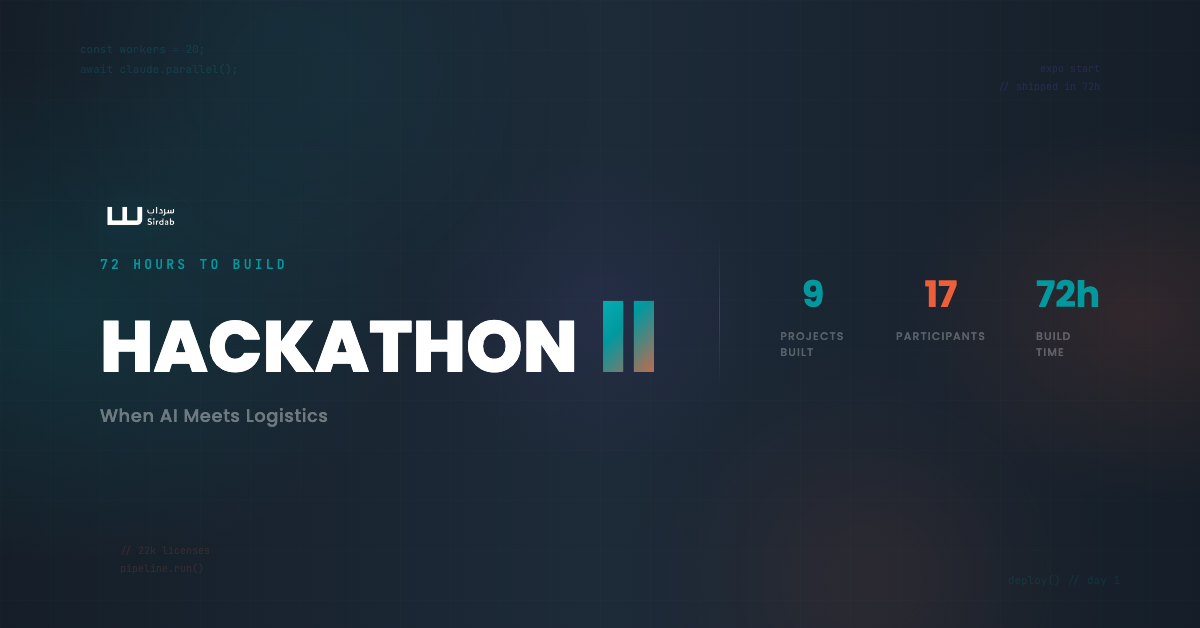
Sirdab’s second AI Hackathon brought together teams across the company to build real systems in just 72 hours. From AI agents processing partner orders to a license intelligence engine built from public data, the projects showed how fast experimentation has become possible. What once took weeks can now be prototyped in days.

Naif Alzahri
Share:
.webp)
.webp)
.webp)
In Q4 2025, we hosted our first hackathon. It ended up being one of the most memorable days at Sirdab. Teams built internal tools, small automations, and quick prototypes that solved problems they deal with every day.
One of the AI agents we run today has processed more than 200,000 messages across WhatsApp and web channels. That infrastructure began as a simple hackathon experiment.
At the end of that week we all agreed on one thing. We had to do it again, but with more time and a bigger budget.
The context
Logistics is one of the most operationally dense industries in the world.
Every day our teams deal with fragmented data, manual processes, regulatory requirements, and constant pressure to operate efficiently. The challenge is not a lack of ideas. The real constraint has always been the cost of building and testing them.
AI is changing that equation. Today a small team can prototype something meaningful in a matter of days. Problems that used to be too small to prioritize or too expensive to explore suddenly become viable experiments.
Instead of debating ideas for weeks, you can simply build something and see what happens.
That was the spirit behind Hackathon II.
The setup
The tooling landscape has changed dramatically since our first hackathon. Claude can now run as multiple parallel workers. Codex can scaffold large portions of frontend code. Development environments are faster, lighter, and easier to spin up.
Teams had 72 hours to build something they could demonstrate to the entire company. No restrictions on what to build. The only rule was that the project had to solve a real problem or explore a meaningful opportunity.
The Projects
Rebuilding Sirdab Marketplace with AI
One team started with a simple question: if we were building the Sirdab marketplace from scratch today using modern AI tools, how would it work? And more broadly, what is the impact of AI on marketplaces?
The marketplace is already live at marketplace.sirdab.co. But the hackathon wasn't about incremental improvements. It was about rethinking the architecture. The team spun up 20 parallel Claude workers and began rebuilding it at speed.
There's a structural reason this excited us. Traditional marketplaces depend on large operations teams to manage every step of the lifecycle: sourcing listings, onboarding owners, verifying information, handling inquiries, coordinating visits, managing support. As volume grows, headcount grows. Costs scale linearly.
AI breaks that model. Agents can meet owners where they already are (WhatsApp, email, phone) and handle coordination automatically. This decouples operational cost from transaction volume, lowering the marginal cost of running the marketplace, especially in early stages of growth.
The marketplace is live today. The AI features are in beta. We'll share more as they evolve.

Light Mobile Merchant App
We always wanted to build mobile apps for merchants, but always thought it might be a distraction. What if we can build it in 72 hours?
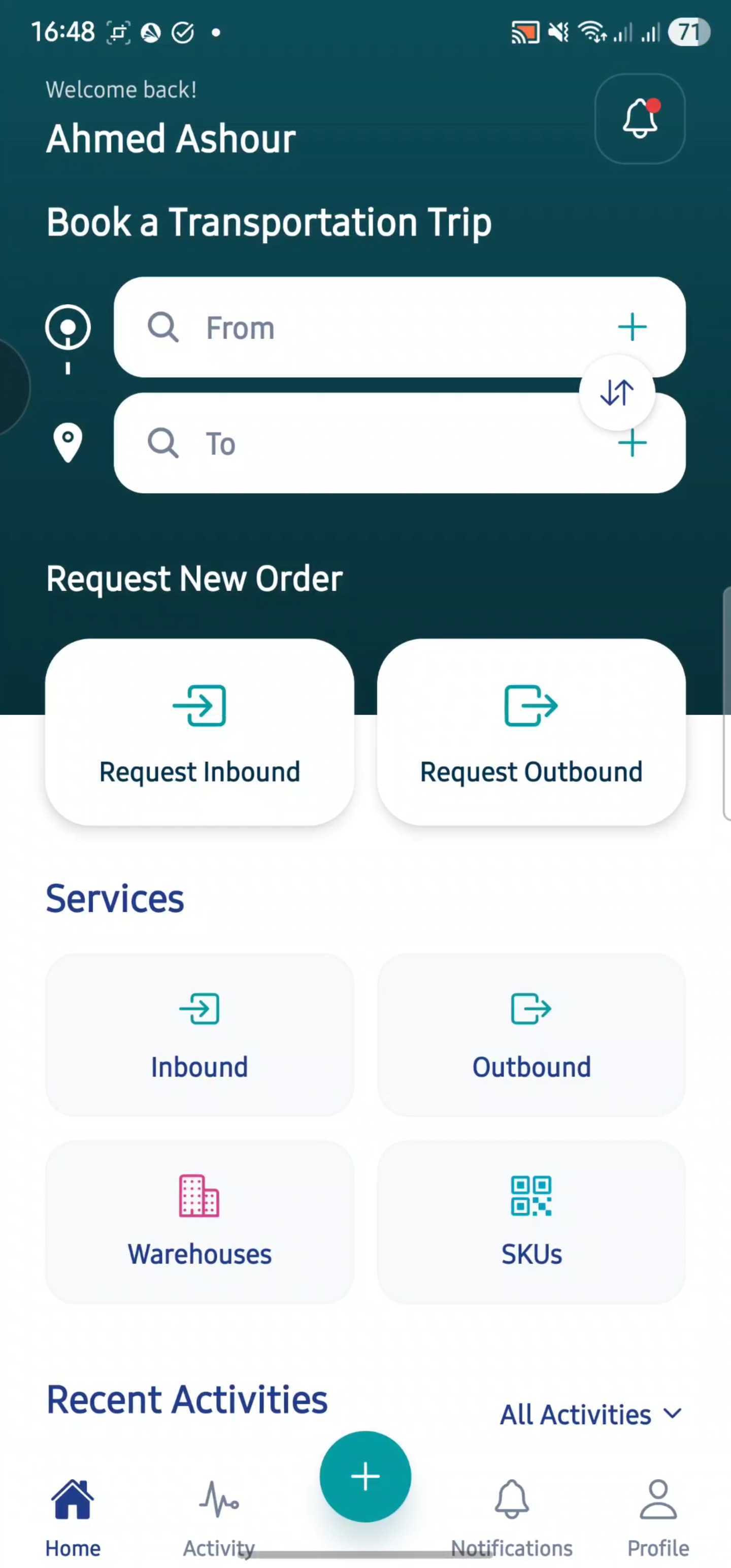
One developer used Expo o go from an empty project to a working merchant-facing mobile app in less than three days. By connecting Figma MCP, the team turned existing designs directly into production-ready mobile components. The result was a surprisingly great MVP.
License Intelligence Engine
One of the most interesting projects focused on turning open government data into a growth engine.
The team built a pipeline to scrape, clean, and structure a public registry of licensed establishments across Saudi Arabia. The result: 22k clean license records. What makes this valuable is that every license has an expiry date. We can identify which companies might need logistics services and when.
The first outreach campaign targeted over 800 companies with licenses approaching expiry. The early response rate was 10 percent, significantly outperforming typical outbound benchmarks.
The dataset now lives in BigQuery and triggers automated outreach across multiple fronts. What started as a hackathon experiment is quickly becoming a structured growth engine.

Automated Partner Order Processor
Logistics runs on communication between partners, and a lot of that communication still happens over phone calls, emails and Whatsapp. PDFs, Excel sheets, scanned documents, and unstructured messages still arrive daily. Someone on the ops team has to open each one, find the relevant data, and manually enter it into the platform. It works, but it doesn't scale.
This project, continuing work from Hackathon I, expanded our AI-powered email processor into a full end-to-end pipeline. The system now ingests partner emails automatically, captures attachments, extracts structured order data, and prepares draft orders directly inside the Sirdab platform. Email arrives, order gets created. Manual handling disappears.
Text to Report Generator
Every company has the same quiet problem. People spend hours each week assembling reports that follow the same structure, pulling the same data, formatting the same spreadsheets. The work is repetitive but feels necessary because every stakeholder wants a slightly different view.This project built a system where users describe the report they want in natural language and receive a generated Excel file. Add columns, change filters, modify calculations, all through conversation. The team also experimented with saving reusable templates so recurring reports can be regenerated in a single click.
AI Product Associate
Product managers carry an enormous amount of context. Past decisions, design rationale, grooming discussions, feature requests, support patterns. Most of it lives across dozens of documents that nobody has time to re-read. When new work begins, teams often rely on memory, and memory is unreliable.This project loaded a Claude context window with product documentation, historical specs, partner portal designs, and feature discussions. The result is an assistant that generates PRDs, reviews product ideas, summarizes past discussions, and identifies recurring support issues. A product manager's second brain that never forgets what was decided or why.
Partner Acquisition AI Agent
Qualifying new partners requires multiple conversations, document collection, and back-and-forth that can stretch over days. The partnerships team spends significant time on early-stage intake before they even get to evaluate whether a partner is a good fit.This project built an AI agent that handles the initial partner interview. It asks qualification questions, collects documentation, and guides potential partners through early verification steps. The agent handles the top of the funnel so the team can focus on what matters most: evaluating fit and closing.
Rebuilding the Frontend of NomanDen - Sirdab’s AI Platform
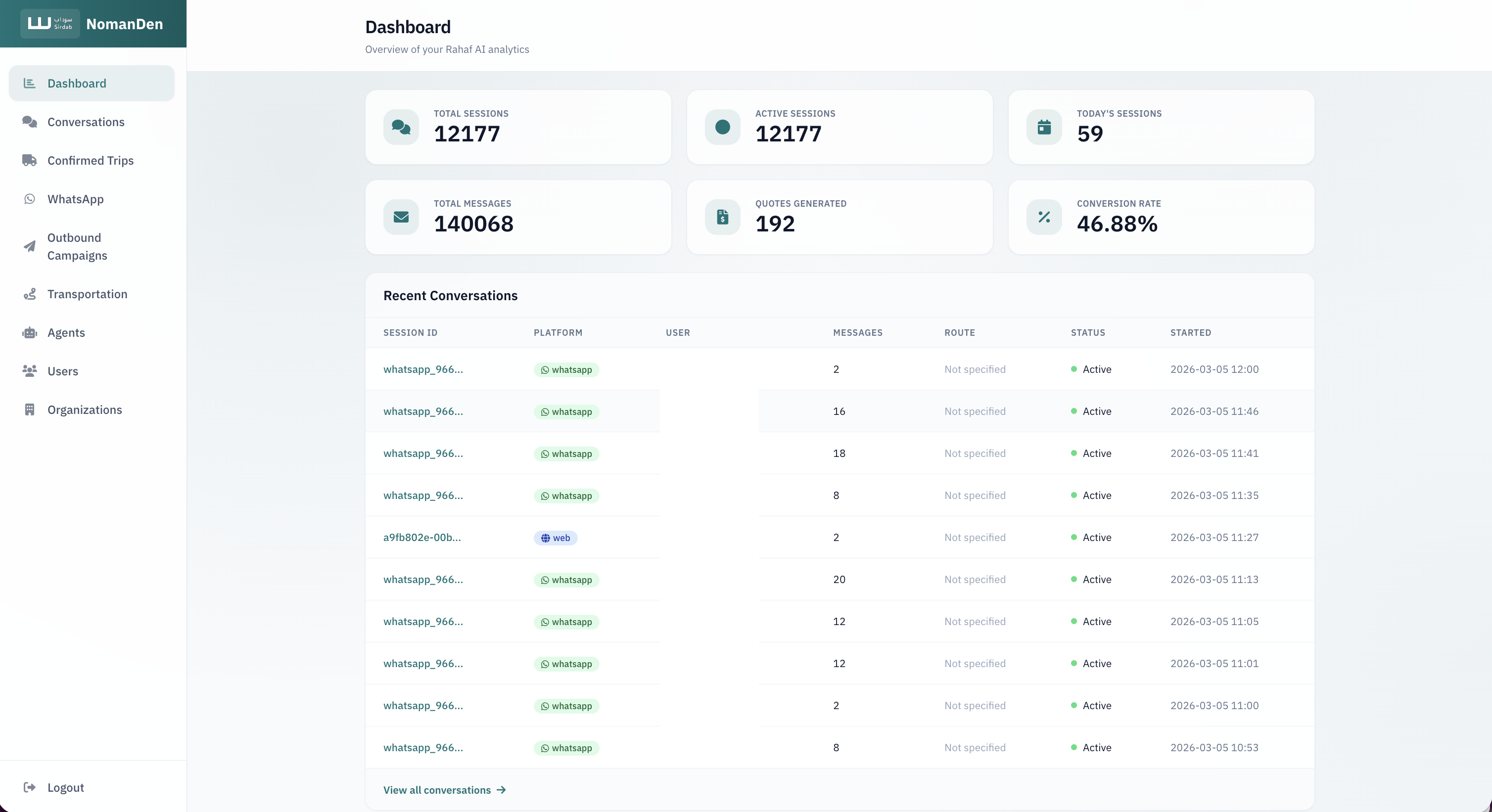
NomanDen is the platform we built to deploy and orchestrate AI agents across the business. In 2025, it processed over 10,000 conversations and generated more than 120,000 messages autonomously.As the platform grew in scope, so did the need to modernize how our team interacts with it. The hackathon project focused on completely revamping the NomanDen frontend using Tailwind CSS, leveraging AI coding assistants to accelerate the rebuild. What would normally take weeks of careful refactoring was compressed into days.
Athr
One team wanted to explore something entirely outside of logistics. The question: can we build a production-ready social network in 72 hours?
The insight behind Athr is simple. People already form impressions and opinions about people they interact with. A delivery driver, a sales caller, a support agent. But those impressions disappear.
Athr changes that. It lets people leave anonymous impressions about phone numbers. Each impression adds signal. Over time, numbers gain memory. A reputation layer built on top of something everyone already uses.
Think of it as a social proof layer for the real world. Not profiles, not followers, just accumulated trust attached to the simplest identifier there is: a phone number.
The team built and shipped it in a single day. Next time someone wrongs you, don't wait for karma to kick in. Just leave an Athr. Check it out here: https://athr.social
What We Learned
The speed of experimentation has fundamentally changed. Many of these projects moved from idea to working prototype within days.
Domain experts can now build real tools. Some of the most interesting ideas came from operations and business development, not engineering.
Several prototypes are already being evaluated for production, including the license intelligence engine and the email order processor.
The gap between an idea and a working prototype has never been smaller. When fast AI tooling meets deep operational knowledge, surprising things happen. Even inside a logistics company.
And yes, there will be a Hackathon III.
Want to build things like this with us?
Sirdab is building the operating system for logistics in the Middle East. If you enjoy experimenting, building quickly, and turning ideas into real systems, we would love to meet you.
Check out our open roles or apply to the Sirdab Hackers Program.
Content
_Cropped%20-%20Edited%20(1)%20(1).png)
.webp)

.webp)